In the afternoon of November 7, 2024, the Association for Research on AI in Learning and Leadership kicked off the “2nd Global Forum on Artificial Intelligence in Language Education” and the launch conference of the world’s first AI + oral practice robot at the Singapore National Library Building.
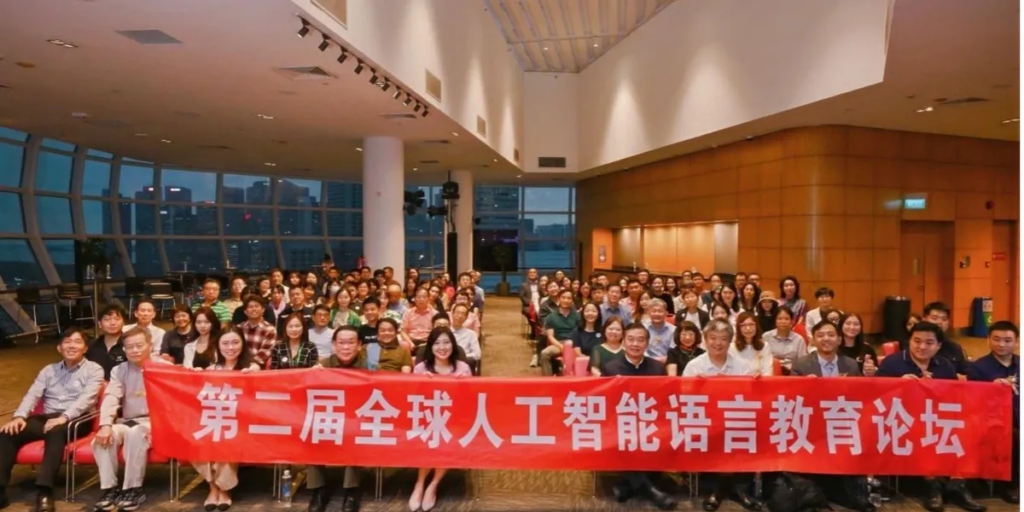
This event attracted over 130 attendees, including artificial intelligence experts, educational scholars, corporate representatives, and cultural elites from around the world. Leaders from Singapore’s Ministry of Education, Singapore Teachers’ Academy, and Singapore Teaching and Research Center also attended the event in person to witness and discuss the innovative applications and future development of artificial intelligence in the field of language education.
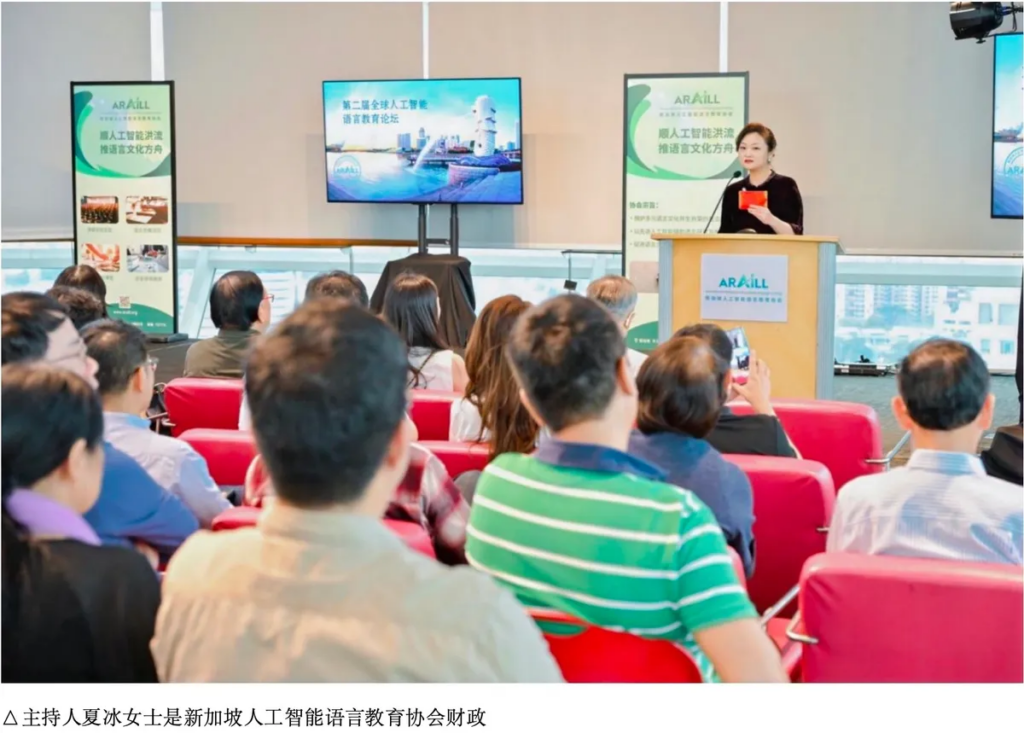
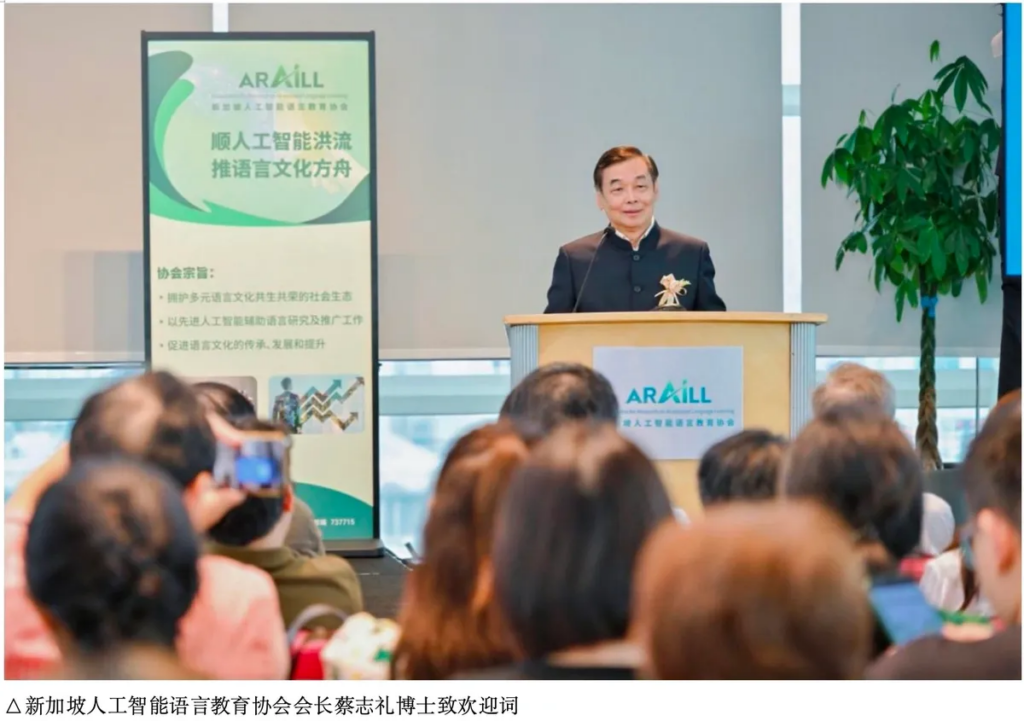
Ms. Xia Bing, the host, delivered an opening speech to kick off the event. Dr. Cai Zhili, President of the Association for Research on AI in Learning and Leadership, was the first to deliver an opening welcome speech.
Chairman Cai first extended a warm welcome to Dr. Lin Meijun, Secretary-General of the Singapore Committee for the Promotion of Chinese Language Learning, who attended the event in person and provided strong support, as well as all the guests. He stated that due to the general trend, both national policies and the public have strongly put forward demands, which have given AI the best historical opportunity to unleash its unlimited potential. “Riding the tide of artificial intelligence, promoting the ark of language and culture,” Dr. Cai emphasized that the new language learning model we have constructed with the help of AI’s powerful functions is based on important discoveries in the field of neurolinguistics in recent years, including muscle memory. The application of AI in language teaching is not to replace teachers, but to reduce the burden on teachers with the assistance of AI and comprehensively improve the quality of education.
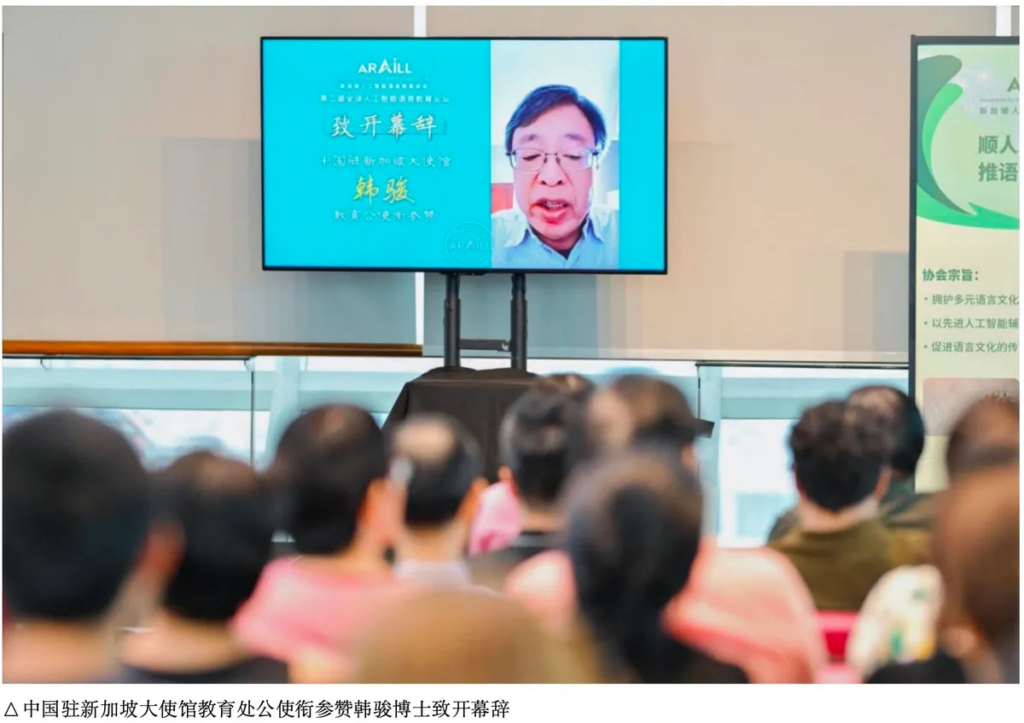
Dr. Han Jun, Minister-Counsellor of the Education Office of the Chinese Embassy in Singapore, was unable to attend the event in person due to official duties, but he still warmly delivered an opening speech for the forum through a pre-recorded video. Taking Singapore’s Chinese education system and the current status of Chinese teaching in various countries as examples, Counsellor Han analyzed the similarities and differences in today’s international language education, namely the different characteristics of country-specific development and the common challenges brought by the rapid development of artificial intelligence technology. He pointed out that education should not become a testing ground for digital technology, and the digital transformation of international Chinese education cannot simply copy the application models of artificial intelligence technology in other fields. Instead, it should keep pace with the times and uphold integrity while innovating, based on the particularity of the essential nature of education as nurturing people.
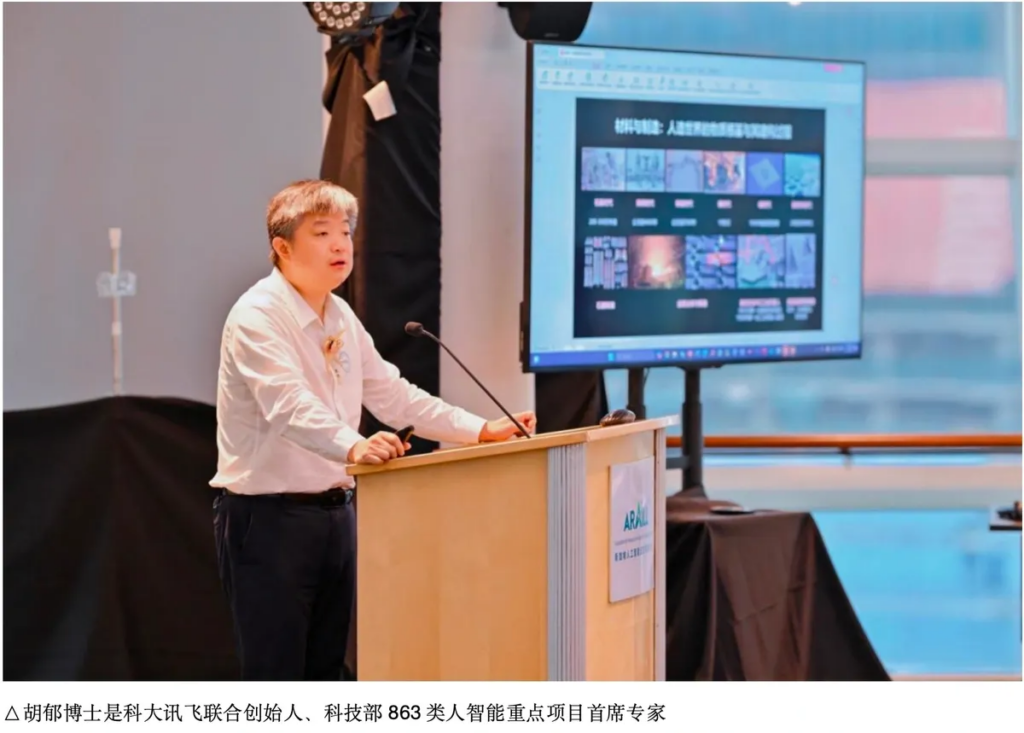
Dr. Hu Yu, co-founder of iFLYTEK and chief expert of the Ministry of Science and Technology’s 863 Key Project on Human-like Intelligence, gave a sharing around the theme “Artificial Intelligence in Progress: Confusions and Answers”. He particularly emphasized that technological innovation ≠ product innovation. In the fields of software and artificial intelligence, software must be carried by hardware. Intermediate products or the overall products need market-oriented screening. When software and hardware are inseparable, their market value may be recognized; however, after software and hardware are separated, software and artificial intelligence enterprises will encounter dilemmas and need to make breakthroughs. Finally, Dr. Hu Yu stated on the issue of human education in the “post-artificial intelligence era” that artificial intelligence technology should ultimately assist in improving the overall ability of complex innovative work.
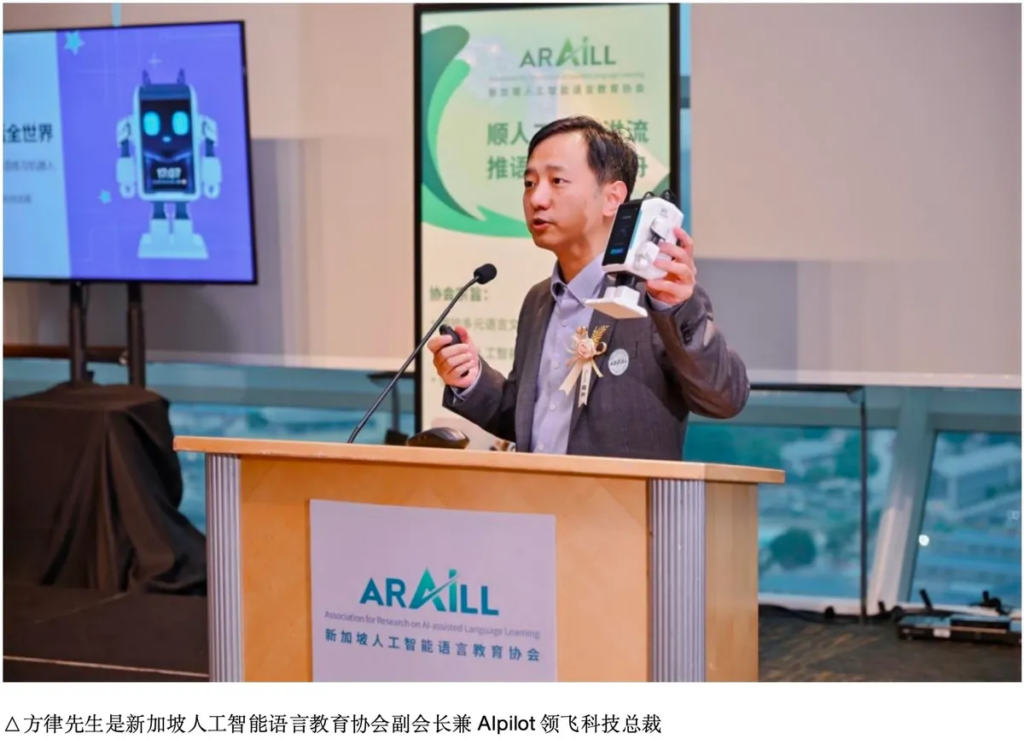
Subsequently, the event entered the launch session of Kabao, the world’s first AI + oral practice robot.
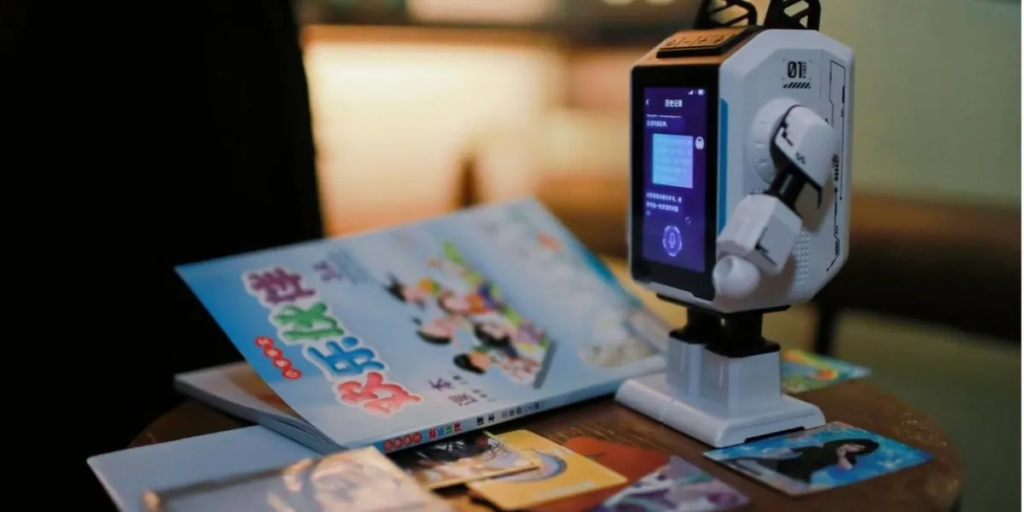
Mr. Fang Lü, Vice President of the Association for Research on AI in Learning and Leadership and President of AIpilot Leading Technology, elaborated on the functional features and technical advantages of Kabao: it can recognize massive IPs to make characters speak, provide AI-assisted oral practice with Chinese-English mutual translation, enable scene-based learning synchronized with textbooks and picture books, and realize mock exam training for various international official exams such as KET|PET|FCE through officially homologous exam technology. He also demonstrated on-site the interaction between the robot and learners. Taking Kabao as the carrier, he introduced how AI will comprehensively empower different partners to achieve personalized learning in different scenarios.
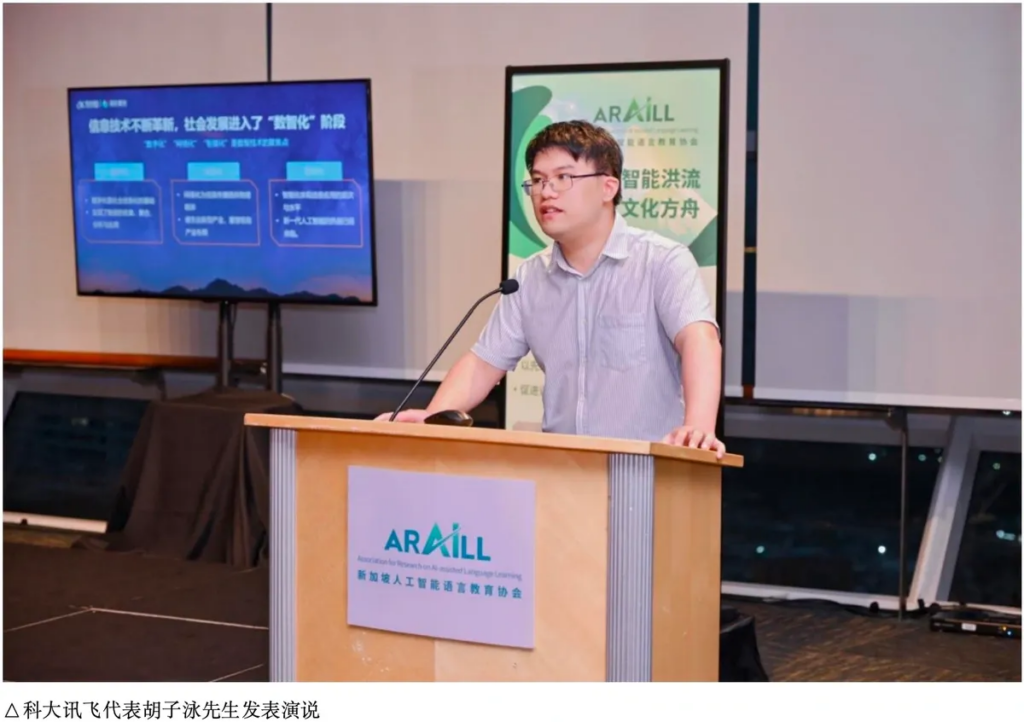
Finally, regarding how artificial intelligence can助力 the digital development of Chinese language education, Mr. Hu Ziyong, representative of iFlytek, focused on introducing the iFlytek Spark Large Model 4.0, and elaborated in detail to all present how iFlytek’s artificial intelligence technology, covering the entire business scenarios of Chinese language learning including teaching, learning, testing, evaluation, and management, gradually illuminates new opportunities for personalized teaching and learning.
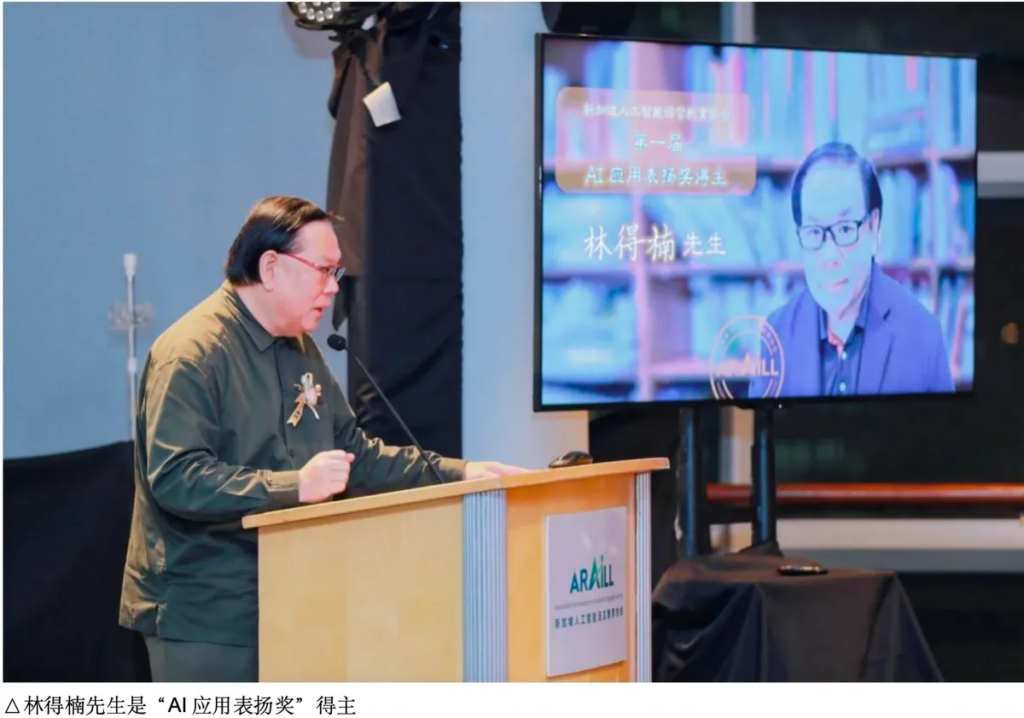
The Association for Research on AI in Learning and Leadership also specially arranged the first AI Application Recognition Award ceremony during the event. The winner was Mr. Lin Denan, in recognition of his years of efforts in applying artificial intelligence to promote the creation and appreciation of language and literature in Singapore.
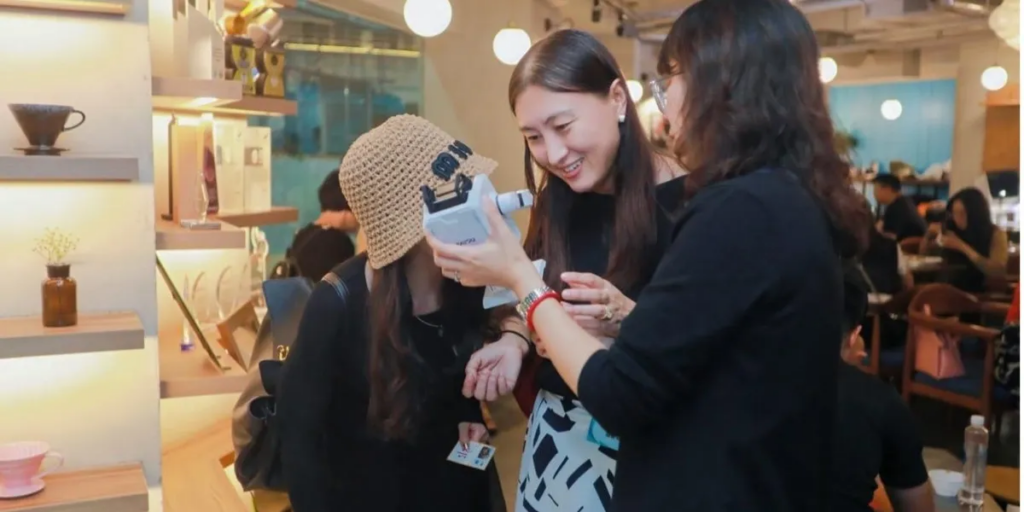
In addition, the event also arranged subsequent product experience sessions and a dinner gathering, where the attending guests can personally experience these products and applications, feel the changes brought by artificial intelligence in the field of language education, and fully discuss customized cooperation with different fields.
Through this series of activities, everyone has witnessed that artificial intelligence is demonstrating its unique superpowers in the field of language education. It enables: every teacher to have an intelligent teaching assistant, every student to have an intelligent tutor and learning companion, every principal to have an intelligent assistant, and every textbook to have supporting learning and practice scenarios. Educators will devote more efforts to leveraging their advantages in innovation, complex decision-making, emotional care, etc., and focus on the soul, happiness, and lifelong learning anytime and anywhere.