
On December 2, 2024, the Association for Research on AI in Learning and Leadership (hereinafter referred to as the “Association”) organized a team of renowned Singaporean teachers to visit universities and enterprises in Hefei for exchanges on the topic of AI empowering bilingual education. Educational experts such as Zhang Tingting, Vice Principal of Bukit Panjang Government Secondary School in Singapore, Lin Qiuyan, Director of the Mother Tongue Department at Singapore Chinese Girls’ School, and Zheng Xiuling, Senior Chinese Teacher at Zhangde Primary School in Singapore, visited the Affiliated Middle School of the University of Science and Technology of China (USTC), the University of Science and Technology of China (referred to as “USTC”), and iFlytek Co., Ltd. successively, and jointly explored new opportunities for educational innovation and international cooperation.
First stop: Teaching style of the Affiliated Middle School of the University of Science and Technology of China (USTC)
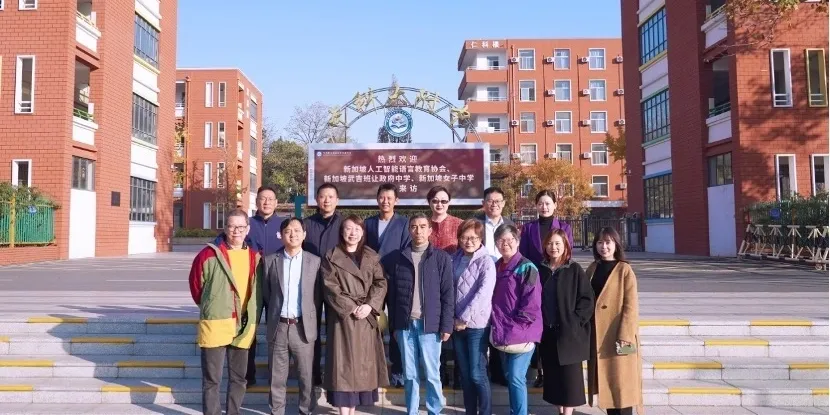
At exactly 9:00 a.m., the delegation first arrived at the Affiliated Middle School of the University of Science and Technology of China (USTC). As a key middle school that focuses on students’ all-round development and the cultivation of innovative abilities, the Affiliated Middle School of USTC has attracted much attention with its advanced teaching philosophy and rich curriculum system. Led by Principal Tang of the Affiliated Middle School of USTC, the delegation visited several characteristic classrooms and facilities of the school.
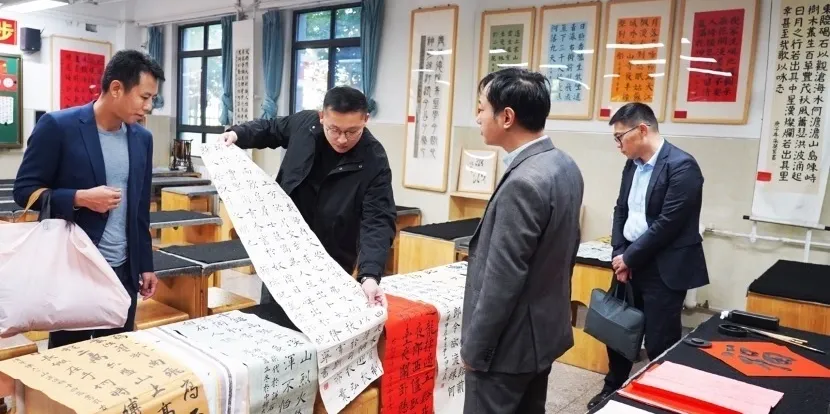
- Calligraphy Classroom: The calligraphy teacher from the Affiliated Middle School of USTC is introducing the children’s calligraphy works and the awards they have won.
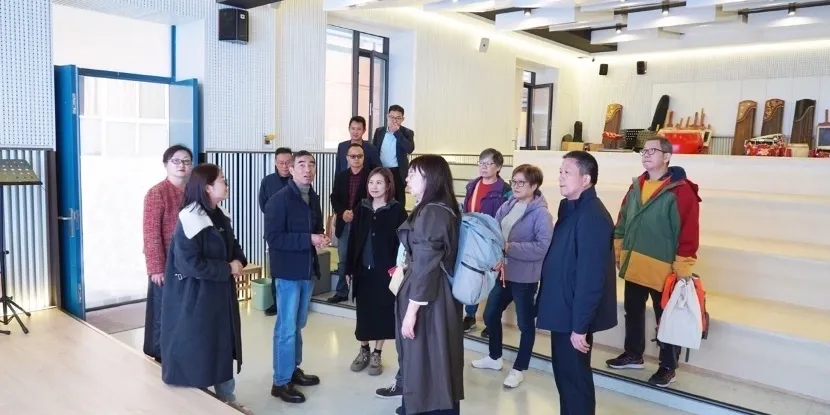
- Music Rehearsal Hall: Watch the excellent choral works of the Affiliated Middle School’s choir, and experience the auditory feast brought by the advanced equipment in the music classroom with a “sound” immersive feeling.
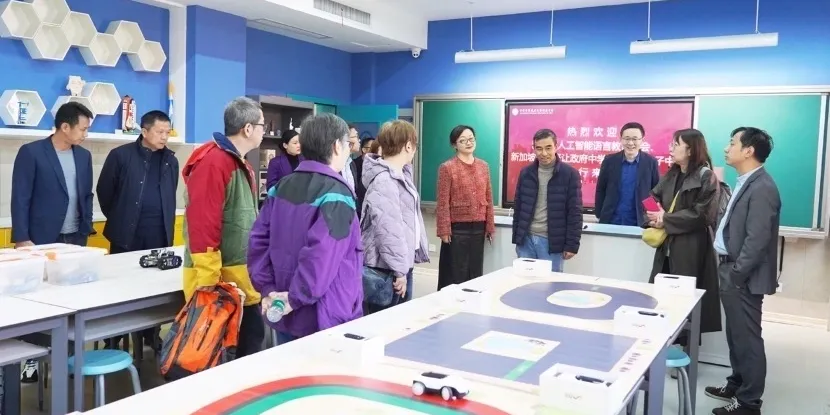
Innovation and Technology Classroom: The various robot models, programming equipment, and students’ works displayed in the Innovation and Technology Classroom reveal children’s interest in artificial intelligence and their innovative talents.
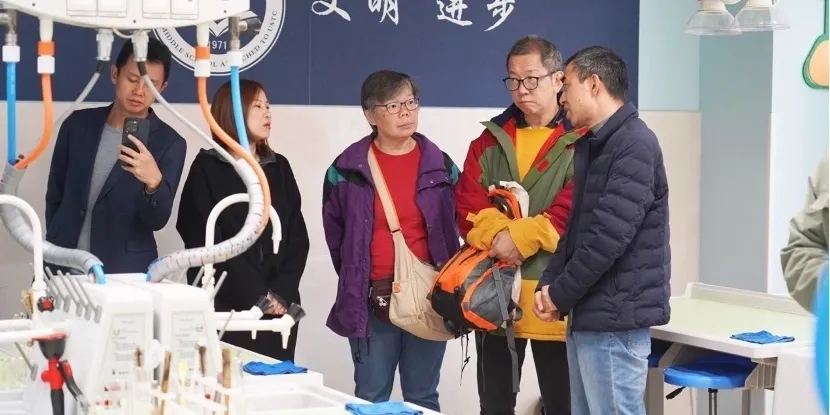
Laboratory: In the biology and physics laboratories, teachers elaborated on the laboratory safety regulations and the design ideas of experimental courses, emphasizing the importance of practical teaching for understanding scientific principles.
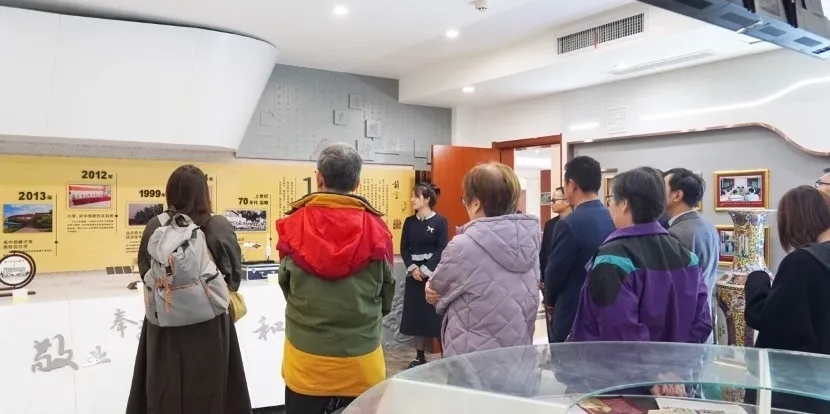
School History Museum: Finally, the delegation visited the School History Museum to learn about the development history and achievements of the High School Affiliated to the University of Science and Technology of China. Through a wealth of pictures, physical objects, and multimedia materials, the School History Museum vividly showcases the school’s historical changes and cultural heritage.
Second stop: Entering the University of Science and Technology of China
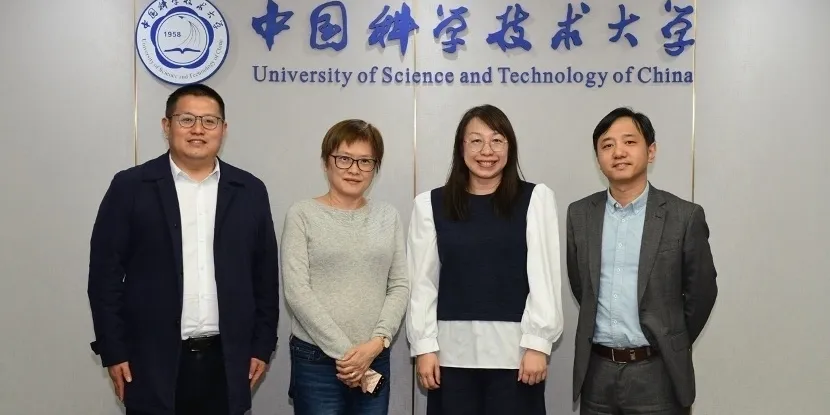
Subsequently, the delegation proceeded to the University of Science and Technology of China. There, everyone visited the university’s history museum, gaining an understanding of the development history of this institution of higher learning since its establishment and its significant contributions to China’s scientific and technological progress. Then, accompanied by Teacher Wang Chen from the International Cooperation and Exchange Department, the two sides conducted in-depth discussions on topics such as international education cooperation models and bilingual teaching experiences. Principal Zhang from Bukit Panjang shared his insights on bilingual education, while representatives from the association introduced Singapore’s successful cases in language education, particularly the practical application of AI tools to assist language learning.
Third stop: iFlytek’s artificial intelligence exhibition
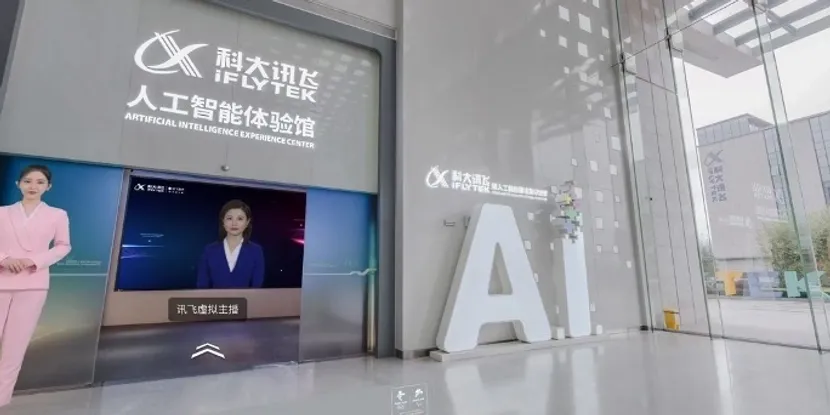
On the morning of December 3rd, the visiting team arrived at the headquarters of iFlytek. In the A5 exhibition hall of iFlytek, a series of AI-based teaching auxiliary tools and smart office solutions attracted widespread attention. Through on-site demonstrations, one could personally experience how artificial intelligence helps improve teaching efficiency and optimize learning experiences. Especially in the immersive experience session of the smart classroom, members of the delegation showed strong interest in the personalized learning system developed by iFlytek and discussed the possibility of introducing these technologies into Singapore’s education system.
This exchange activity has deepened the mutual understanding between China and Singapore in the field of educational technology and laid the foundation for deeper cooperation in the future. The Association for Research on AI in Learning and Leadership hopes that through such interactions, it can further promote cooperation between the two countries’ education sectors in artificial intelligence education, jointly explore and create more efficient and personalized learning environments, and make efforts to cultivate a new generation of innovative talents.